Unveiling the Central Nervous System of Japan’s Stock Market: A Comprehensive Analysis of Japan Exchange Group
To secure a decisive advantage in the Japanese stock market, one must first gain a thorough understanding of its "central nervous system"—the Japan Exchange Group (JPX). Wind data reveals that in early March 2024, the total market capitalization of Japanese stocks listed on the JPX surged to over 1,000 trillion yen, firmly securing its position as the third-largest globally, trailing only the United States and China.
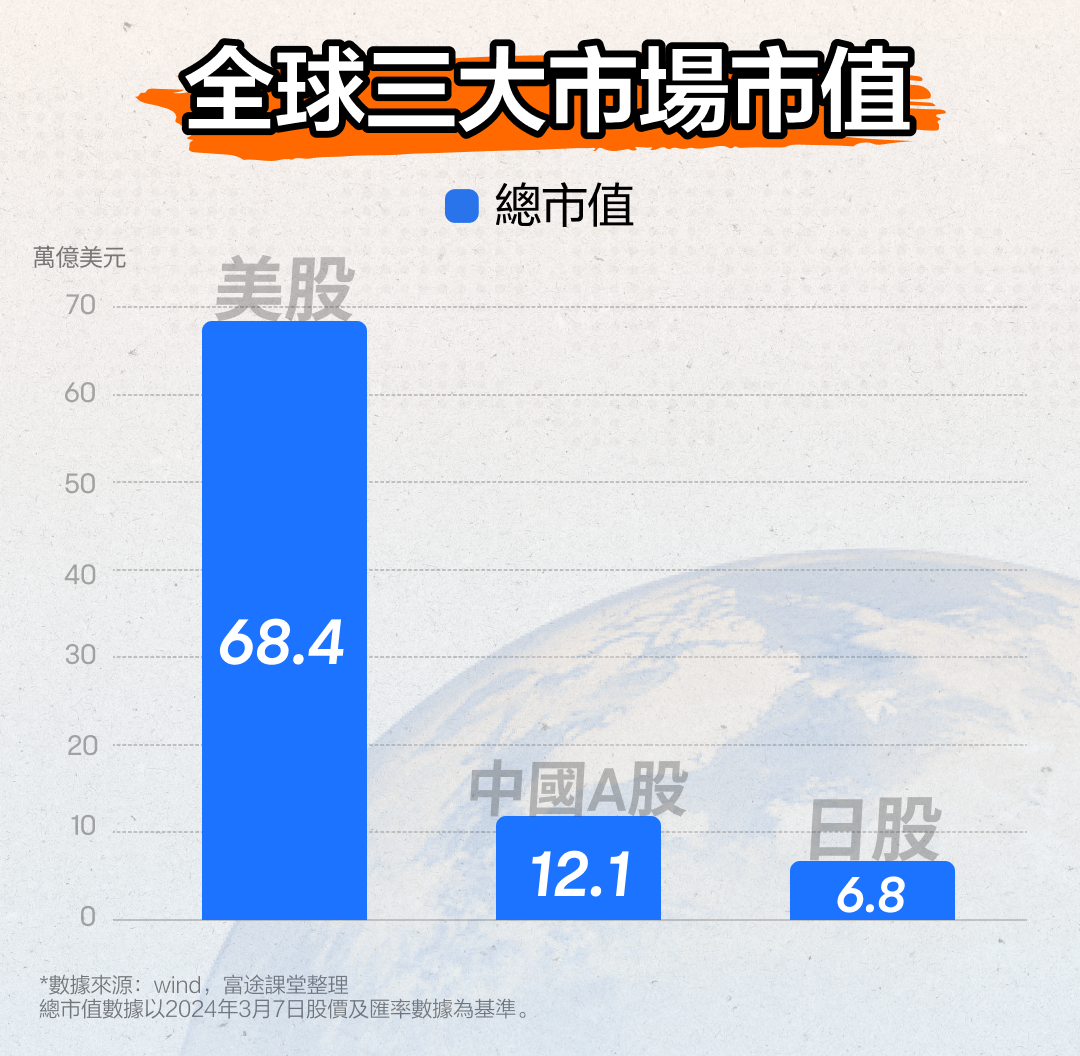
As one of Asia’s exchange giants, the JPX is not merely a hub for corporate listings and trading but also a focal point for investors. It features world-class brands such as Toyota Motor and Sony shining brightly, alongside the vibrant dynamism of various emerging industries and small and medium-sized enterprises.
Understanding the historical evolution of the JPX, its listed companies, market capitalization scale, and industry distribution is essential for familiarizing oneself with the broader Japanese equity market. Therefore, to navigate the Japanese stock market with ease, let us comprehensively examine its exchange infrastructure.
History of the Japan Exchange Group
Tracing back through history, the story of Japanese stock exchanges dates to the Meiji Restoration in the late 19th century, when joint-stock companies began to emerge. In 1878, the Tokyo and Osaka Stock Exchanges were established successively, marking the official launch of Japan’s modern stock market. Although small in their early stages, these exchanges provided a financing platform for industries such as railways and mining.
Over time, particularly with the rapid advancement of industrialization, the Japanese economy experienced robust growth, accompanied by a flourishing stock market. During the post-World War II reconstruction and high-growth periods, the Japanese stock market expanded rapidly, attracting attention from both domestic and international capital. However, it also experienced the highs of the bubble economy in the late 1980s and the subsequent "Lost Decades." Despite this, the influence of the JPX in global financial markets has continued to advance amidst fluctuations.
Entering the 21st century, and notably in 2013, the Tokyo Stock Exchange and the Osaka Securities Exchange joined forces to establish the Japan Exchange Group, further enhancing market integration and competitiveness. Today, the Tokyo Stock Exchange focuses on spot trading of stocks, ETFs, and bonds, while the Osaka Exchange specializes in derivatives such as futures and options.
With the Japanese stock market sustaining a bull run for over a decade, the JPX’s weight in global financial markets has grown increasingly significant, continuously attracting prominent investors.
Business Structure and Trading Instruments of the Japan Exchange Group
Let us now examine the business architecture and trading instruments of the JPX. Spot trading, primarily centered on equities, constitutes the mainstream of the Japanese securities market and is mainly handled by the Tokyo Stock Exchange. The Tokyo Stock Exchange comprises four core market segments: the Prime Market, the Standard Market, the Growth Market, and the TOKYO PRO Market, which is designed specifically for professional investors.
According to data from the Japan Exchange Group (JPX) website, as of the end of February 2024, there were 3,990 listed companies on the Tokyo Stock Exchange (TSE), with a total market capitalization of approximately JPY 1,014 trillion. Among these, 1,655 companies are listed on the Prime Market, which represents stability and strength. These companies generally possess robust profitability and globally recognized corporate governance standards, attracting significant attention from international investors. This segment serves as the cornerstone of the entire listed market, with a total market capitalization of approximately JPY 963 trillion, accounting for an impressive 95% of the total.
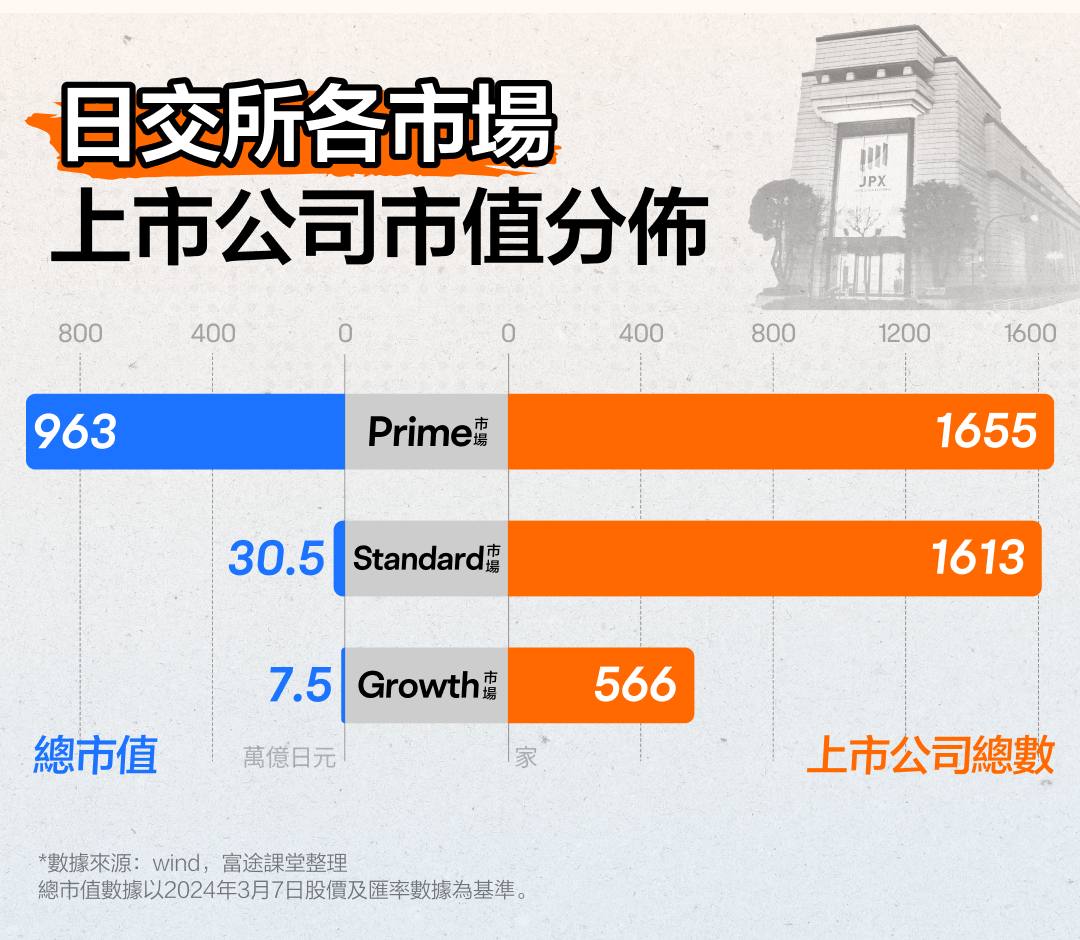
On the other hand, the Standard Market provides a platform for mid-tier companies with established brand recognition and business foundations. Approximately 1,613 companies are actively traded in this segment, with a combined market capitalization of around JPY 30.5 trillion, representing roughly 3% of the total market capitalization of all listed companies. Although this proportion is relatively small, these companies remain an indispensable source of strength for the Japanese stock market.
The Growth Market is a hub for dynamic and innovative emerging companies, open to those with high growth potential and unique proprietary technologies and knowledge. Currently, there are approximately 566 listed companies in this market, with a total market capitalization of about JPY 7.5 trillion. Although this accounts for less than 1% of the total market capitalization of all listed companies, it resembles the rising sun, signaling greater possibilities ahead.
Beyond its primary focus on equity trading, the Tokyo Stock Exchange is also active in other investment areas such as bonds and funds. In the bond market, the TSE has established a two-tier structure: one tier is the convertible bond market accessible to general investors, while the other is the professional investor bond market designed specifically for professional investors. This structure encompasses various types of convertible bonds and government bond products, ensuring that all types of participants can find suitable investment channels.
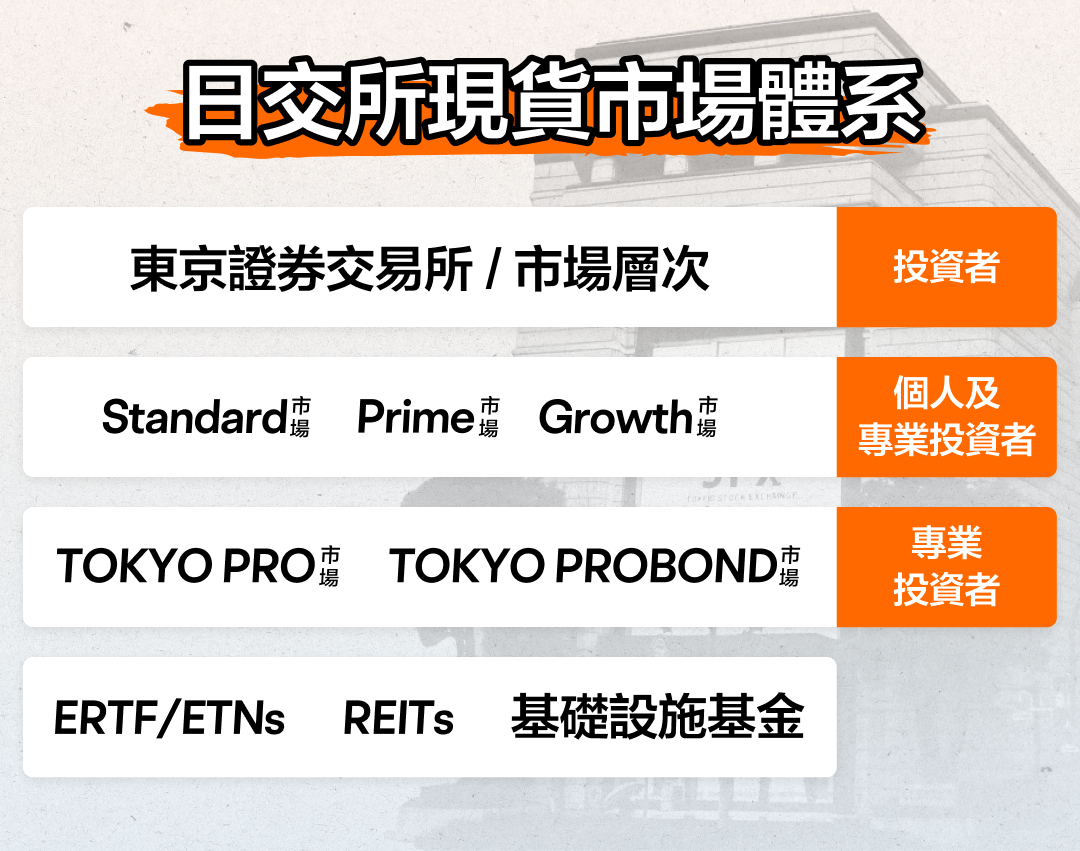
For fund products, the Tokyo Stock Exchange offers a diverse range of indexed products, including but not limited to ETFs, ETNs, REITs, and infrastructure investment funds. These indexed products are varied, comprising size-based and segment-based indices categorized by market scale and market tier, as well as sector and product-specific indices broken down by industry and product category.
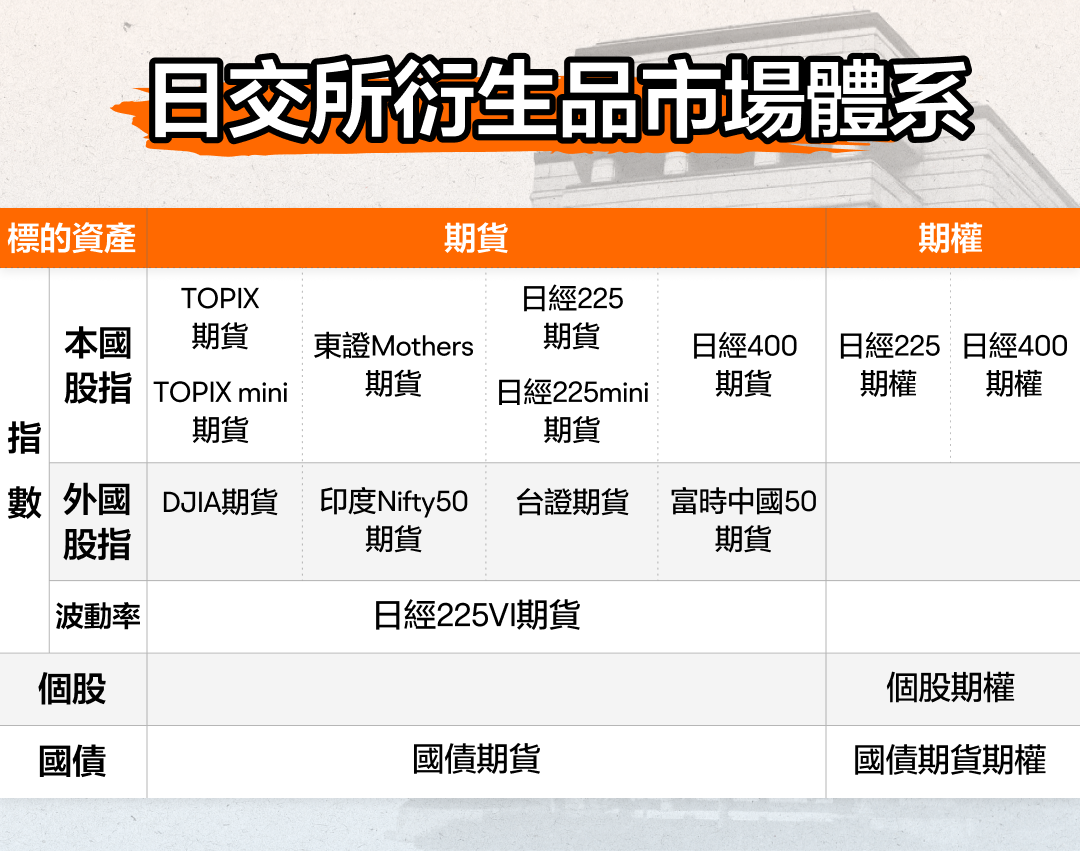
The derivatives market is primarily operated by the Osaka Exchange, another key component of the JPX group. It provides a series of futures and options trading services, covering products such as index futures, index options, government bond futures, government bond futures options, and single-stock options. The underlying assets covered are extensive and deep, including not only stock and government bond price indices and volatility indices from developed domestic markets but also those from emerging markets worldwide.
Listed Company Structure of the Japan Exchange Group
In the Japanese market, equity trading dominates all investment categories. We will now focus on introducing the listed companies and equity structure of the Japan Exchange Group (JPX).
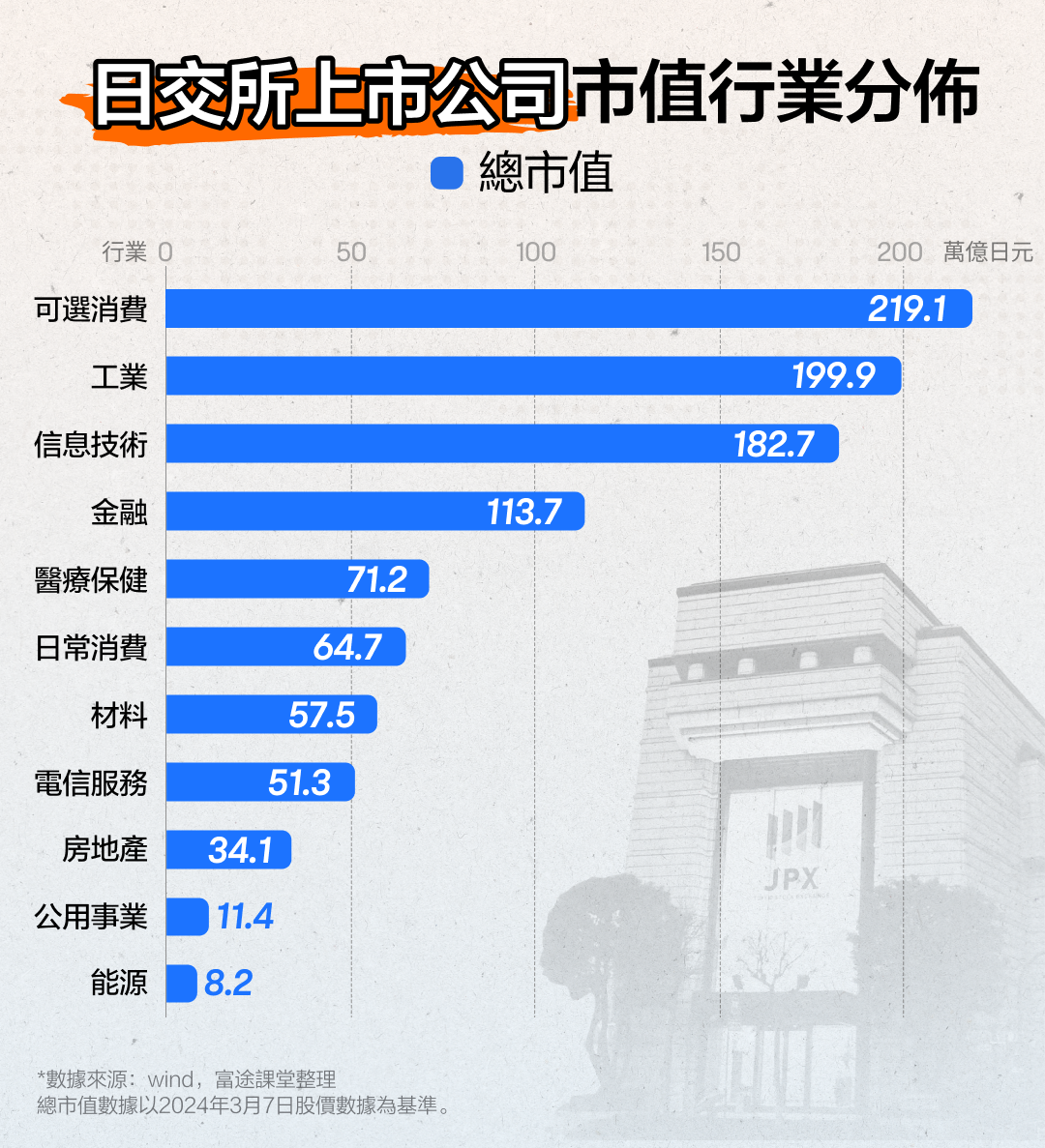
According to Wind data, in terms of industry distribution among listed companies, mirroring Japan’s economic and industrial structure, the top three sectors by both total market capitalization and number of companies are Consumer Discretionary, Industrials, and Information Technology.
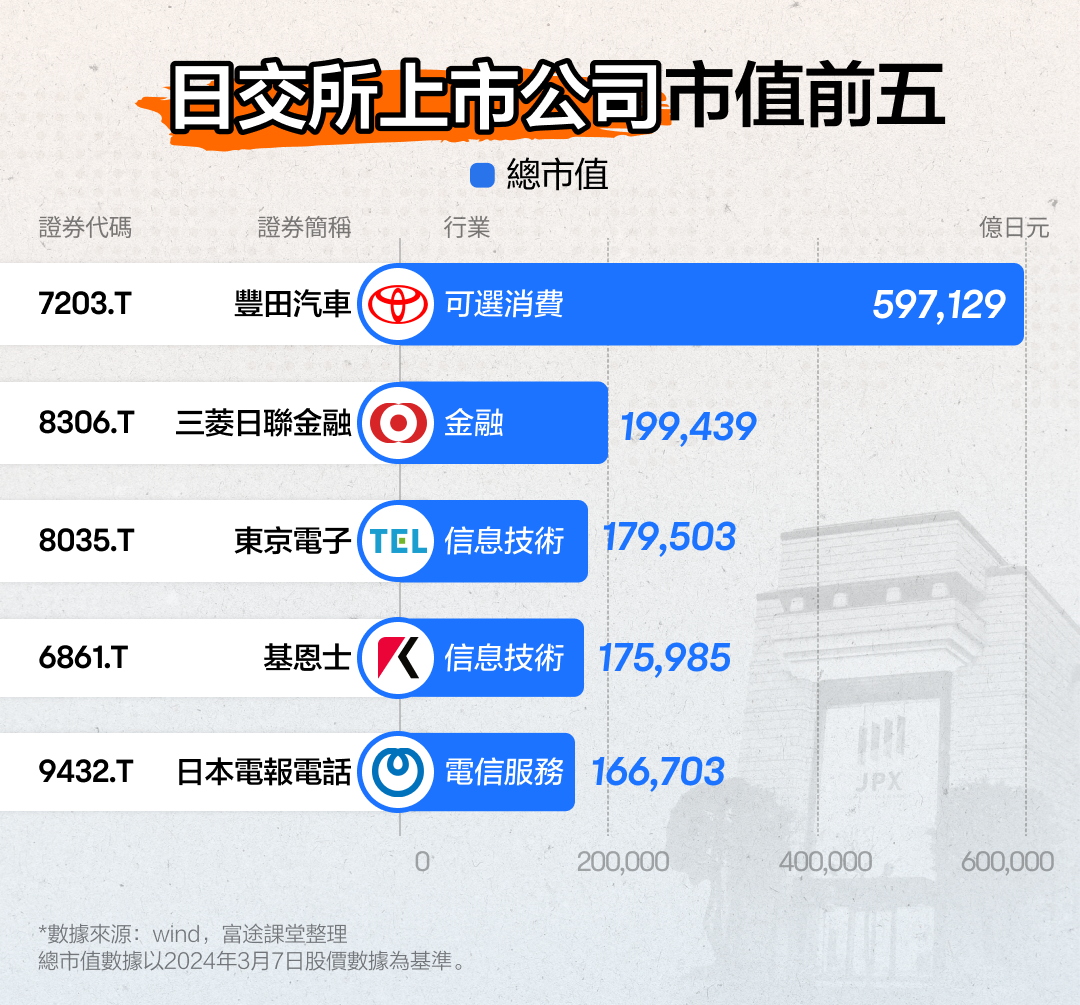
Among them, the top five companies by market capitalization represent leading enterprises in their respective fields. For instance, Toyota Motor leads the Consumer Discretionary sector; Mitsubishi UFJ Financial Group holds a pivotal position in the financial sector; Tokyo Electron and Keyence shine in the Information Technology industry; and Nippon Telegraph & Telephone firmly occupies the top spot in the Telecommunications Services sector.
In terms of shareholding structure, foreign investors hold the largest share at approximately 30%, followed by investment trusts at around 23%, which also include holdings by the Bank of Japan. Corporate entities and individual investors follow, accounting for approximately 20% and 18%, respectively.
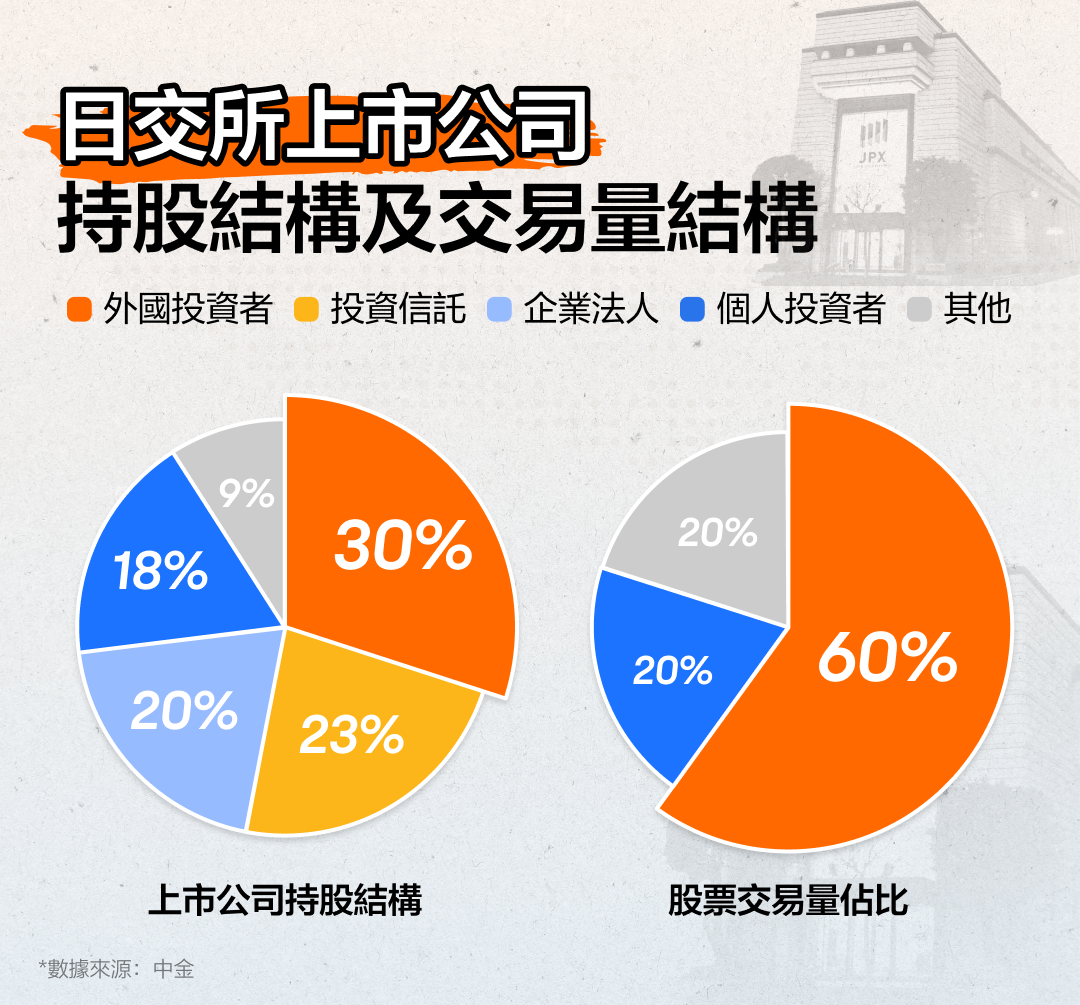
Regarding trading volume, foreign investors lead significantly with a share of approximately 60%, followed by individual investors at around 20%. The trading volume shares of all other investor categories do not exceed 5%. Although the Bank of Japan holds certain shares through investment trusts and other means, its actual annual contribution to trading volume remains relatively limited.
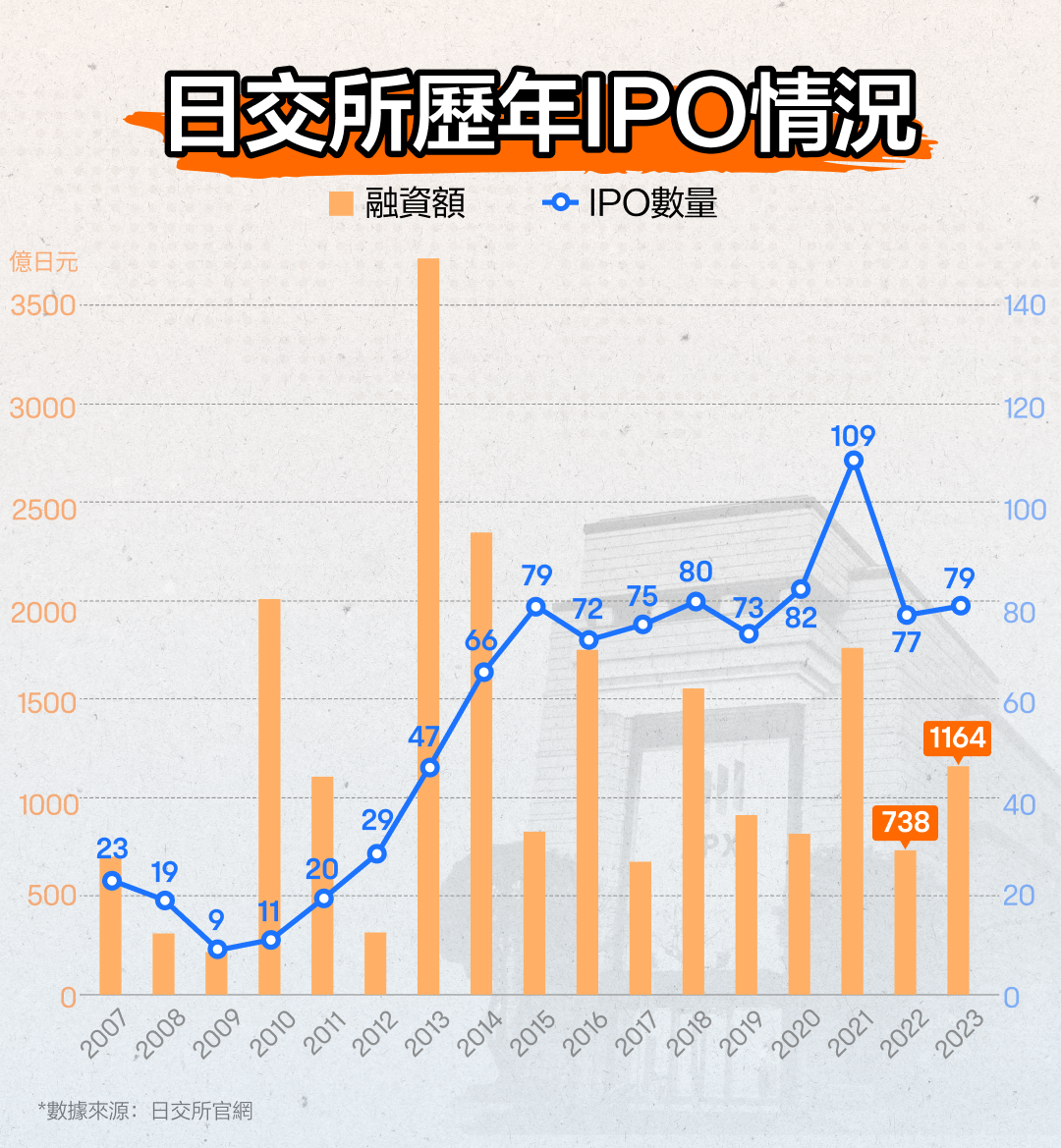
From the perspective of Initial Public Offerings (IPOs) injecting fresh capital into the market, 79 companies were listed on the Japan Exchange Group (JPX) in 2023, representing a slight increase from the previous year. The total IPO fundraising scale in 2023 was approximately JPY 116.4 billion, marking a significant rise compared to 2022. Overall, the pace of IPO issuances on the JPX is relatively slow; although the total market capitalization of its listed companies consistently ranks among the top five, or even top three, globally, the scale of IPO fundraising rarely appears in the global top five.
In summary,
The Japan Exchange Group serves as a time capsule承载ing the glorious history and fluctuations of the Japanese stock market. From its humble beginnings as a small exchange during the Meiji Restoration, it has navigated numerous challenges to enter the core circle of global financial markets. It hosts various types of listed companies, from established giants like Toyota Motor and Sony to promising newcomers in emerging industries, all showcasing themselves on the JPX stage and attracting capital from all directions.
Currently, the JPX not only ranks among the top three equity markets globally but also offers investment opportunities across various derivatives markets, fully demonstrating the depth and broad coverage of Japan's financial market. Despite having experienced the dramatic boom and bust of the bubble economy in the past, the JPX has demonstrated strong resilience and growth momentum through continuous reform and innovation, particularly through the strategic alliance between the Tokyo Stock Exchange and the Osaka Exchange.
As the Japanese stock market continues its bullish trend in recent years, foreign investors have increased their investments. This may indicate that the influence of the JPX in global financial markets is only growing, positioning it to become an increasingly pivotal player in the future.
Therefore, for those seeking to allocate assets globally, thoroughly studying the business composition, trading products, and characteristics of individual listed companies on the JPX may be the key to navigating this dynamic and challenging capital market.
Disclaimer: The above content does not constitute any act of financial product marketing, investment offer, or financial advice. Before making any investment decision, investors should consider the risk factors related to investment products based on their own circumstances and consult professional investment advisors where necessary. Read More